Water heater after a flood: what to do and why it usually gets replaced
After a basement flood, the water heater may look fine and even fire up. Manufacturers and federal safety agencies agree you shouldn't trust it until a professional has looked, and in most cases it needs to be replaced.
Updated October 26, 2026 · 6 min read · By the Heater Doctor team
Short answer
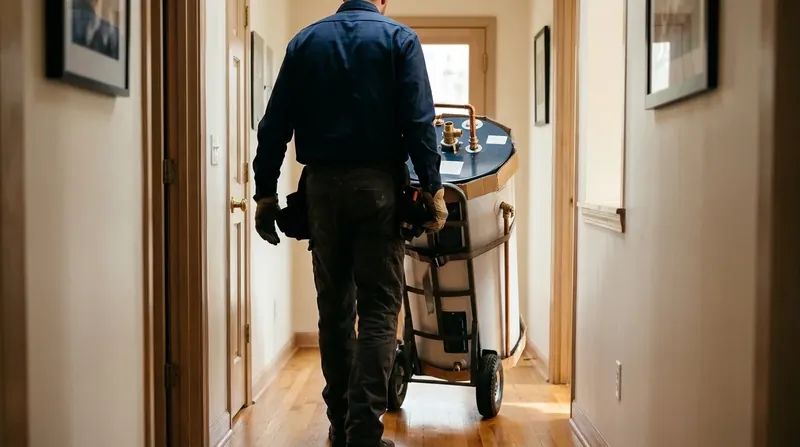
Don't turn on or relight a water heater that has been underwater. A. O. Smith's position is that any water heater exposed to flooding should be replaced, and Bradford White says to call a plumber to replace, not repair, if it was flooded to any degree. The U.S. Consumer Product Safety Commission says gas control valves that have been underwater must be replaced and can't be salvaged. If you have flood insurance, FEMA lists a basement water heater under building coverage, so photograph it before anything is moved.
First, make it safe
FEMA's guide, Repairing Your Flooded Home, sets the order:
- If there's standing water against the outside walls, don't go in. Walk around the outside first and check for downed power lines and the smell of gas.
- Smell gas? Leave and call the gas company from a neighbor's home.
- Turn off the power at the main breaker or fuse box, but only if you can reach it without stepping in water. If you can't, call an electrician. Pulling the meter doesn't always cut the power.
- Close the gas valve on the pipe to the water heater if the water reached the level of the burner. FEMA adds that appliances that were hot when flooded may have cracked parts.
Don't try to light the pilot or reset an electric heater to "see if it works". Our gas smell guide covers what to do if you notice gas later.
Why manufacturers say replace
A. O. Smith's Bulletin 0823 says any water heater or boiler flooded by water from any source should be replaced, and not operated if any part has been underwater. It warns of unseen damage to concealed wiring, connectors and insulation that may not show up right away, and that flooding can interfere with the heater's safety features. It also says flooding voids all warranty coverage, and repairs other than full replacement aren't covered.
Bradford White gives the same advice: if your water heater was flooded to any degree, have a plumbing professional replace it, even if it still seems to work.
The reasons are specific:
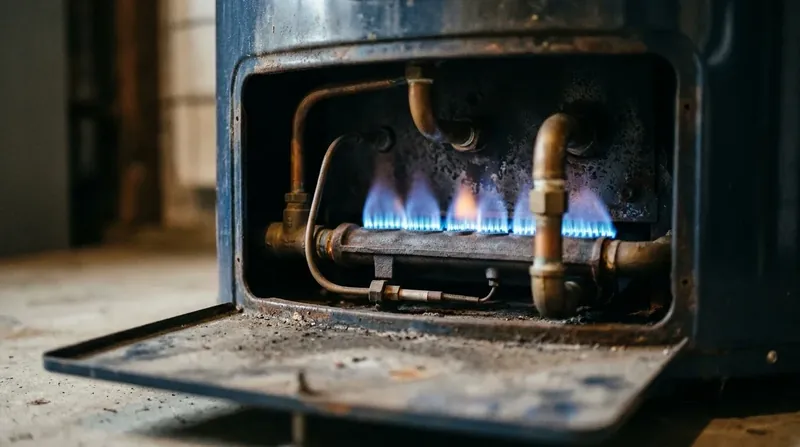
- Gas control valve. The CPSC says silt and corrosion from flood water damage the inside of gas control valves and can stop them working properly, so gas can leak and cause an explosion or fire. Valves that were underwater must be replaced, even if they seem to work.
- Burner, venting and controls. The CPSC says other submerged parts of gas and electric appliances, including venting systems, need a qualified technician's evaluation, and whole appliances may need replacing.
- Insulation. The insulation between the tank and the outer jacket sits in the flood water too. A. O. Smith lists it among the parts that can be damaged without it being visible.
What about repairing it?
FEMA's guide is a little softer. It says a water heater should be replaced if floodwater got into the gas burner, electrical parts or insulation, and that if you want to save it, a professional should clean it and restart it. Weigh that against the manufacturers: a repaired flooded heater loses its warranty, and on a gas heater the control valve has to be replaced either way. On an older tank, that usually tips it to replacement. See how old your water heater is.
Insurance: photograph it first
FEMA's fact sheet on basements says flood insurance coverage there is limited, but furnaces and water heaters are listed as covered building items, along with circuit breaker boxes, sump pumps and fuel tanks. Items have to be connected and installed in their working location. FEMA also says the adjuster needs the manufacturer, model, serial number and capacity of equipment like this, so photograph the rating label before the heater is removed.
Coastal towns see this most. Marshfield, Massachusetts takes part in FEMA's Community Rating System, and the town says its class 7 rating gives residents a 15% discount on flood insurance (see our Marshfield page). In Hull, the state's coastal office says repeated storm flooding threatens about 4,000 properties along the shoreline (see our Hull page).
Putting the new one back
FEMA suggests installing a replacement water heater on a higher floor if you can, since a water heater can go anywhere near a hot water pipe. If it has to stay in the basement, it describes putting heavy appliances on platforms, or building a low floodwall 1 to 2 feet high around the water heater, furnace and washer to stop shallow flooding.
Before using hot water for dishes or laundry, FEMA says to flush clean water through the system.
Rather have a plumber look at it?
Call and describe what's happening. We'll get a plumber out to diagnose and fix it.
Call for service(858) 465-8561Local pages mentioned
Related water heater services
Common questions
Can I use my water heater after a flood?
Not until a professional has checked it. A. O. Smith and Bradford White both say a flooded water heater should be replaced, and the CPSC says gas control valves that were underwater must be replaced.
Does flood insurance cover a water heater?
FEMA lists water heaters among the building items covered in a basement under a flood policy. They need to be connected and installed in place, and the adjuster will need the model and serial number.
Is a flooded electric water heater safe?
A. O. Smith says not to operate any water heater with parts that have been underwater, because wiring, connectors and insulation can be damaged in ways you can't see.
Sources
- A. O. Smith, Bulletin 0823: Flood Damaged Water Heaters/Boilers
- Bradford White, What should I do if my water heater is exposed to flooding?
- U.S. Consumer Product Safety Commission, Warning to Flood Victims: Replace All Gas Control Valves, Electric Circuit Breakers, GFCIs, and Fuses That Have Been Under Water
- FEMA, Repairing Your Flooded Home (FEMA P-234)
- FEMA, What Does Flood Insurance Cover in a Basement? (fact sheet, January 2022)
General information only. Gas, electrical and pressure work can be dangerous; when in doubt, call a licensed professional.
Still stuck? Get a plumber out.
Call now for water heater repair or replacement.