Water heater thermocouple: what it does and how to tell if it's bad
The thermocouple is a small copper rod that tells the gas valve the pilot is lit. When it fails, the pilot won't stay on. It's a cheap part, but it isn't always the real problem.
Updated October 26, 2026 · 6 min read · By the Heater Doctor team
Short answer
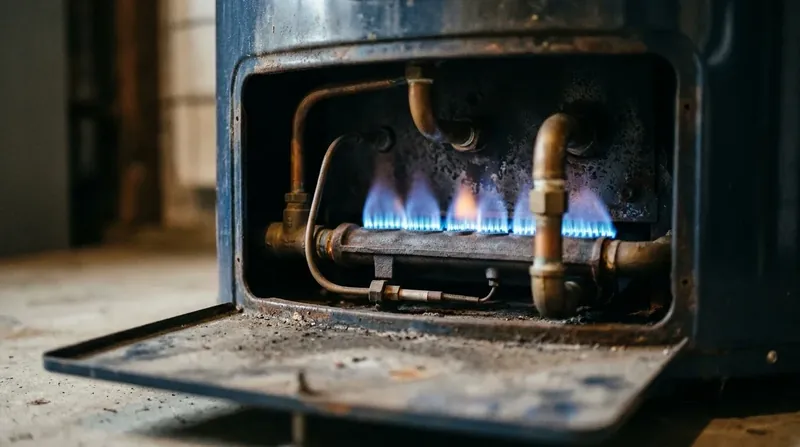
On a standard gas water heater, the thermocouple sits in the pilot flame and produces a tiny voltage that holds the gas valve open. A. O. Smith says a working thermocouple puts out 20 to 30 millivolts. If the pilot lights but goes out as soon as you release the knob, a weak or badly positioned thermocouple is the most common cause. A tripped thermal cutoff, a dirty pilot or a failing gas valve can look the same, so test before you replace.
What the thermocouple does
A. O. Smith's service handbook explains it simply. The pilot flame heats the tip of the thermocouple, which generates a small electrical current. That current powers an electromagnet in the gas control valve and holds the gas safety valve open for as long as the flame keeps heating it. If the pilot goes out, the thermocouple cools and the valve shuts off the gas, though the handbook warns it can take up to 180 seconds to close.
That's why you have to hold the knob down when you light the pilot. You're holding the valve open by hand until the thermocouple gets hot enough to take over.
Signs it's failing
- The pilot lights but goes out the moment you let go of the knob
- The pilot stays lit only if you hold the knob down for much longer than before
- The pilot goes out on its own every few days with no draft or gas problem
For the other reasons a pilot goes out, such as drafts, dirt and combustion air, see pilot light keeps going out.
How it's tested
The handbook's output test uses a multimeter set to millivolts DC. The thermocouple is disconnected from the gas valve, the red lead goes on the copper body and the black lead on the silver end, and the pilot is lit and held. After 45 seconds the meter should read 20 to 30 millivolts or more. Resideo lists open-circuit output of 26 to 32 millivolts for its standard 30 millivolt thermocouple.
A low reading doesn't automatically mean a bad part. A. O. Smith says to first check that the flame actually touches the thermocouple tip, reposition it if needed, and test again. Only replace it if it still reads low.
When it's not the thermocouple
Most heaters sold today are FVIR models, built to resist igniting flammable vapors. A. O. Smith's handbook describes a resettable thermal cutoff switch on these heaters that shuts off the gas if the combustion chamber gets too hot. It can be tripped by spilled gasoline or solvents, a blocked vent, or not enough combustion air. If that switch has tripped, a new thermocouple won't help, and the cause has to be found first.
The handbook also describes a high-limit safety in the gas valve that opens if the water gets too hot. It isn't resettable, and if it opens, the whole gas control has to be replaced. If the thermocouple tests good and the pilot still won't hold, the gas valve is the next suspect.
Replacing it
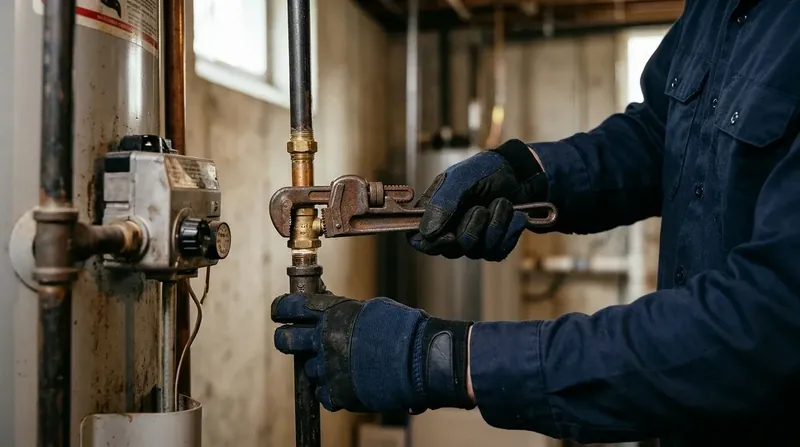
On many older heaters, a thermocouple is a cheap part that screws into the gas valve. On FVIR heaters it's often part of a sealed burner assembly, and the handbook's steps include removing the burner and resealing the combustion chamber door. Work done wrong there can let flames roll out or vapors in. If you're not comfortable with gas, have a plumber do it.
Gas water heaters are the norm in many towns we cover. About 72% of homes in Hull, Massachusetts heat with gas (see our Hull page), as do about 91% in Timnath, Colorado (see our Timnath page). If you ever smell gas, stop, leave the house and call from outside. See water heater smells like gas.
Rather have a plumber look at it?
Call and describe what's happening. We'll get a plumber out to diagnose and fix it.
Call for service(858) 465-8561Local pages mentioned
Related water heater services
Common questions
How many millivolts should a water heater thermocouple produce?
A. O. Smith says a working thermocouple produces 20 to 30 millivolts when heated by the pilot. Resideo lists 26 to 32 millivolts open-circuit for its 30 mV thermocouple.
Can I clean a thermocouple instead of replacing it?
Sometimes a pilot fails because the flame is weak or not touching the tip. A. O. Smith says to check the tip's position in the flame and retest before replacing.
Why does my pilot still go out with a new thermocouple?
On FVIR heaters, a tripped thermal cutoff, a blocked vent, poor combustion air or a failing gas valve can all shut the pilot off. Those need to be checked next.
Sources
- A. O. Smith, Service Handbook for Standard Residential FVIR Gas Water Heaters
- Resideo, Q340A1090/U 30 mV thermocouple specifications
- A. O. Smith, How to Relight a Water Heater's Pilot Light
General information only. Gas, electrical and pressure work can be dangerous; when in doubt, call a licensed professional.
Still stuck? Get a plumber out.
Call now for water heater repair or replacement.