Why is my water heater making noise?
Water heaters aren't silent, and some sounds are perfectly normal. Others point to sediment, a leak or a pressure problem. Here's how to tell them apart.
Updated October 21, 2026 · 5 min read · By the Heater Doctor team
Short answer
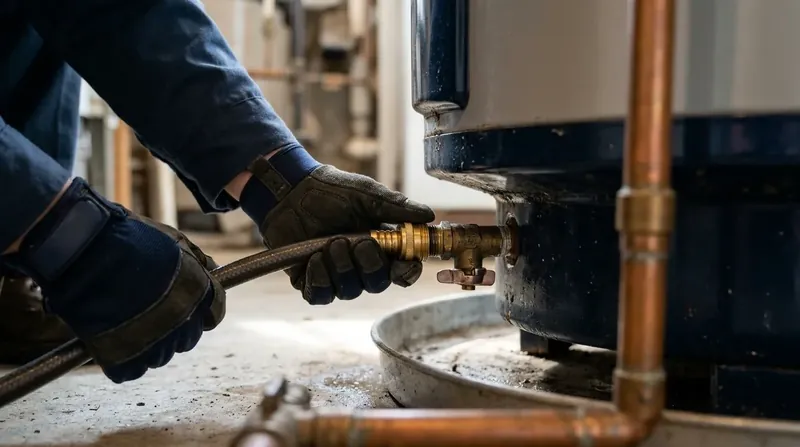
Popping or rumbling is usually sediment at the bottom of a tank. Hissing or singing on an electric heater is often scale on the elements. Sizzling can mean water dripping onto a hot burner, which needs attention now. Ticking is usually normal expansion. Banging when a tap shuts off is usually water hammer in the pipes, not the heater.
Normal sounds
Rheem lists several sounds as normal if they're quiet, brief and regular: ticking or clicking from pipes and heat traps expanding, humming from electric elements while they heat, gurgling after heavy use, and soft ignition sounds on gas models.
Popping, rumbling or boiling
This is the classic sediment noise. Rheem calls sediment the most common cause of popping or rumbling in tank heaters. Bradford White explains that minerals settle on the tank bottom, and when the burner fires, water trapped under that crust bubbles through it.
Hard water makes it worse. A flush can help a younger tank. On an older tank that's popping loudly, the sediment may be packed hard, and it's often a sign the heater is near the end.
Hissing or singing on an electric heater
Bradford White says electric heaters often develop singing or hissing as lime and scale build up on the heating elements. Cleaning or replacing the elements fixes it. Where water is hard, a softener helps prevent it coming back.
Sizzling, hissing or dripping: act now
Rheem warns that hissing, sizzling or dripping sounds can mean an active leak, such as water dripping onto a hot burner on a gas heater or a leaking element gasket. Turn off the power or gas to the heater, stop using it, and have it inspected.
Screeching or whistling
High-pitched sounds usually mean water squeezing through a restriction, like a partly closed valve. Make sure the cold supply valve is fully open. If the sound continues, have it checked.
Banging or knocking
Rheem notes that banging often comes from the plumbing, not the heater. It's water hammer: flowing water stops suddenly, and the pipes shake. Pipe straps, water hammer arrestors or lower water pressure can fix it.
Rather have a plumber look at it?
Call and describe what's happening. We'll get a plumber out to diagnose and fix it.
Call for service(858) 465-8561Local pages mentioned
Related water heater services
Water Heater Repair
Gas, electric and tankless repairs, from pilot lights to heating elements.
Learn more
Leaking Water Heater
Water around the tank or a dripping relief valve. Act before it floods.
Learn more
Water Heater Replacement
When repair no longer makes sense, get a new tank or tankless unit.
Learn moreCommon questions
Will a noisy water heater explode?
Popping from sediment isn't a sign of an explosion. The relief valve protects against dangerous pressure. Sizzling, a hot smell or a hissing relief valve deserve a prompt call.
Will flushing stop the popping?
Often, on a tank that's a few years old. On an older tank with hardened sediment, flushing may not help much.
Why does my water heater make noise when no water is running?
It's usually reheating. Popping during that cycle points to sediment. Clicking is often normal expansion.
Sources
- Rheem, The Ultimate Guide to Water Heater Noises
- Bradford White, Internal Noises
- City of Kuna, water reports
General information only. Gas, electrical and pressure work can be dangerous; when in doubt, call a licensed professional.
Still stuck? Get a plumber out.
Call now for water heater repair or replacement.