Hot water recirculation pumps: how they work and whether they're worth it
If you run the shower for a minute or two before it turns warm, that cold water going down the drain is water you paid for, sitting in the hot pipe. A recirculation pump moves it back to the heater instead. Done right, it saves water and waiting. Done wrong, it can cost more energy than it saves. Here's the difference.
Updated October 29, 2026 · 7 min read · By the Heater Doctor team
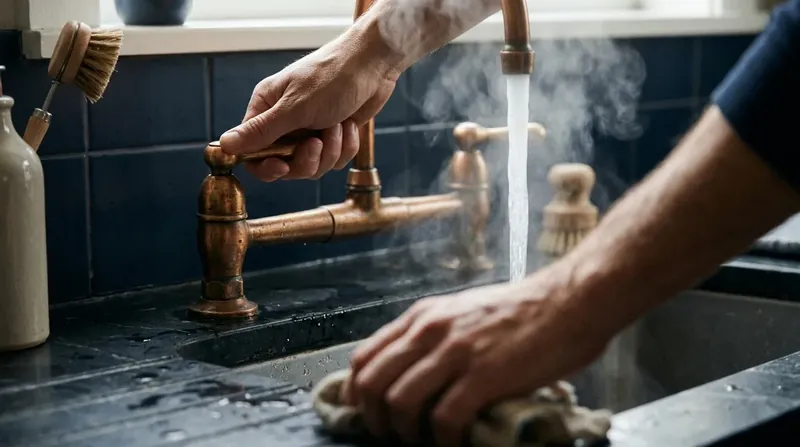
Short answer
A hot water recirculation pump moves the cooled water sitting in your hot pipes back to the water heater, so hot water reaches the tap faster. ENERGY STAR says demand systems, started by a button, motion sensor or timer, can solve the long wait at a distant fixture while saving energy, water and money, but systems that run continuously can use more energy than they save. A. O. Smith says on-demand pumps typically run until the water warms about 10 degrees or reaches 102°F. Homes without a return pipe can use the cold line as the return through a crossover valve.
How a recirculation pump works
When hot water sits in the pipes, it cools. ENERGY STAR explains that in a normal system that cooled water is dumped down the drain while you wait for hot water to arrive from the heater. A recirculating pump instead pulls hot water from the heater while sending the cooled water in the hot line back to be reheated. When the water reaches the set temperature, a control shuts the pump off. ENERGY STAR compares it to running the tap until it gets hot, except the water goes back to the heater rather than down the drain.
Two ways to plumb it
| Setup | How water returns | Where the pump goes |
|---|---|---|
| Dedicated return line | A separate pipe carries cooled water back to the heater | At the end of the hot line, often under a fixture, or on the return line near the heater |
| Cold water line return | A crossover valve at the far fixture sends it back through the cold pipe | At the end of the hot water line |
Both setups come from A. O. Smith's installation guide. A. O. Smith says the cold-line version works with existing plumbing and needs no new pipe. ENERGY STAR notes it warms the cold water slightly, but the cold side returns to its usual temperature in a short time.
Demand vs continuous: the energy catch
This is the part that decides whether a pump saves money. ENERGY STAR says recirculation systems that run continuously can use more energy, from pumping and from heat lost through the pipes, than they save by reducing hot water waste. Demand systems run only when someone is about to use hot water.
- Push button or switch near the sink or shower.
- Motion or door sensor that starts the pump when you walk in.
- Timer for set times of day, such as morning showers.
A. O. Smith says on-demand pumps shut off when the water temperature rises up to 10 degrees above where it started, or when it reaches a maximum of 102°F, depending on the control method, and that a backup timer stops the pump after five minutes if the temperature control fails. It also says all hot water pipes, including the return, need insulation with a one-inch wall or R-7.7, or heat escapes as the water moves.
What the energy code says
The International Residential Code's energy chapter, in the editions shown on UpCodes, sets these rules for circulation systems:
- Circulation pump controls must turn the pump off automatically when the loop is at the desired temperature and when there's no demand for hot water.
- Demand recirculation controls must start the pump from a user's action, from sensing a user's presence, or from sensing hot water flow to a fixture.
- Where a cold water pipe is used as the return, the controls must limit the water entering the cold pipe to no more than 104°F.
- Gravity and thermosyphon circulation systems are prohibited.
Requirements depend on which code edition your jurisdiction has adopted, so a local installer or building department can confirm what applies.
Are recirculation pumps worth it?
They're most likely to pay off where ENERGY STAR describes: a long wait for hot water at a fixture far from the heater. If hot water already arrives quickly, there's little to gain. Before adding one, check that the wait isn't caused by something else, like a heater that's struggling (see how long a water heater takes to heat up) or a single slow fixture (see hot water in the sink but not the shower). For one distant sink, a small heater at the fixture may be simpler (see point-of-use water heaters).
Downsides to know
- Continuous running wastes energy, per ENERGY STAR, so choose demand controls.
- Slightly warm cold water at first on cold-line systems, per ENERGY STAR.
- Heat pump water heaters need care. A. O. Smith says recirculation adds demand on the heater, and without proper controls a heat pump can run longer or continuously, reducing available hot water (see heat pump water heater pros and cons).
- Installation work. A. O. Smith says the job involves electrical connections, plumbing changes and local code requirements, and that most homeowners shouldn't do it without professional help.
What installation involves
According to A. O. Smith, a plumber assesses the plumbing and electrical setup, decides between a dedicated return and the cold-line method, and sizes the pump by the distance to the farthest fixture, the return setup and household use. The work includes the pump, a temperature sensor near the farthest fixture, activation controls, shut-off and check valves, and a crossover valve for cold-line systems. A. O. Smith says the pump runs on a dedicated electrical circuit, that some installs need an electrician, and that the plumber gets the permits and schedules inspections. Homes with compatible plumbing take a few hours.
Rather have a plumber look at it?
Call and describe what's happening. We'll get a plumber out to diagnose and fix it.
Call for service(858) 465-8561Related water heater services
Water Heater Repair
Gas, electric and tankless repairs, from pilot lights to heating elements.
Learn more
Water Heater Replacement
When repair no longer makes sense, get a new tank or tankless unit.
Learn more
Tankless Water Heater Repair
Error codes, lukewarm water and scale buildup on tankless units.
Learn moreCommon questions
Are hot water recirculating pumps worth it?
For a fixture far from the water heater, often yes. ENERGY STAR says demand systems can cut the wait while saving energy, water and money. Continuous systems can use more energy than they save.
What are the disadvantages of a recirculating pump?
Continuous operation can waste energy, cold-line systems briefly warm the cold water, installation needs plumbing and electrical work, and heat pump water heaters need proper controls to avoid running constantly.
Do hot water recirculating pumps use a lot of electricity?
ENERGY STAR says the bigger cost of continuous systems is energy spent pumping plus heat lost from the pipes. Demand controls limit both by running the pump only when hot water is about to be used.
Do I need a return line for a recirculation pump?
No. A. O. Smith says homes without one can use the cold water line as the return, with a crossover valve at the farthest fixture.
How long does it take to install a recirculation pump?
A. O. Smith says a few hours for homes with compatible plumbing, longer where modifications are needed.
Sources
- ENERGY STAR, Demand Hot Water Recirculating System
- A. O. Smith, How to Install a Water Heater Circulating Pump
- International Residential Code, Section N1103.5.1 Heated water circulation and temperature maintenance systems (UpCodes)
- International Residential Code, Demand recirculation water systems (UpCodes)
General information only. Gas, electrical and pressure work can be dangerous; when in doubt, call a licensed professional.
Still stuck? Get a plumber out.
Call now for water heater repair or replacement.