Indirect water heater: how it works and what to check when it goes cold
An indirect water heater has no burner or element of its own. It borrows heat from your boiler, which is why a hot water problem in a boiler-heated home is often a boiler problem.
Updated October 26, 2026 · 6 min read · By the Heater Doctor team
Short answer
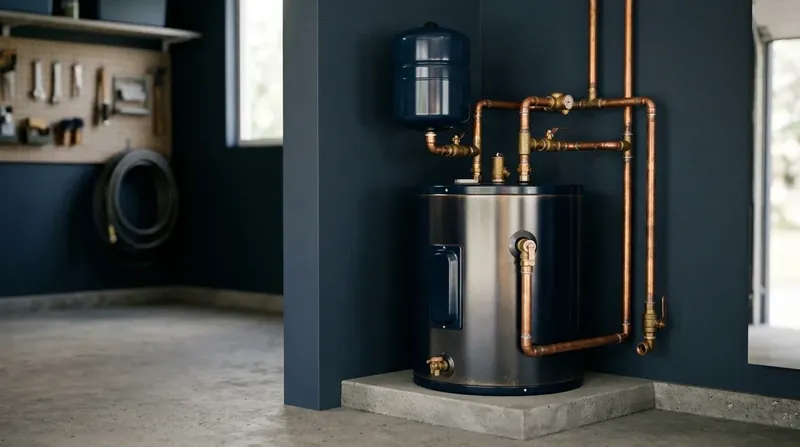
An indirect water heater is a storage tank with a coil inside. Hot water from the boiler runs through the coil and heats the tank water around it, and the two never mix. If you have no hot water, check that the boiler is running first. Amtrol's troubleshooting chart lists no power, an air-bound circulator, a failed circulator or zone valve, a faulty tank control and a boiler that isn't running as the causes. If you have some hot water but not enough, the usual suspects are the temperature setting, the boiler sharing its output with the heating zones, or scale on the coil.
How an indirect water heater works
The tank holds your household water. Inside it is a heat exchanger coil connected to the boiler. When the tank's control calls for heat, a dedicated circulator pump or a motorized zone valve sends hot boiler water through the coil, Amtrol's manual explains, and the boiler fires to keep up. The boiler water stays sealed in its own loop, and ECR International's manual notes the boiler water must be limited to 30 psig and no hotter than 240°F at the coil.
Because the boiler does the heating, the tank itself has fewer parts to fail than a gas or electric water heater: no burner, no gas valve, no elements. The trade-off is that the tank goes cold whenever the boiler, pump, valve or wiring between them stops working.
No hot water at all
Amtrol's BoilerMate manual lists five causes, in this order:
- No power. Check the circuit breaker, the boiler emergency switch and the boiler reset switch.
- Air-bound circulator. Air trapped in the boiler loop stops the pump moving water. The fix is purging the air and checking the air vents.
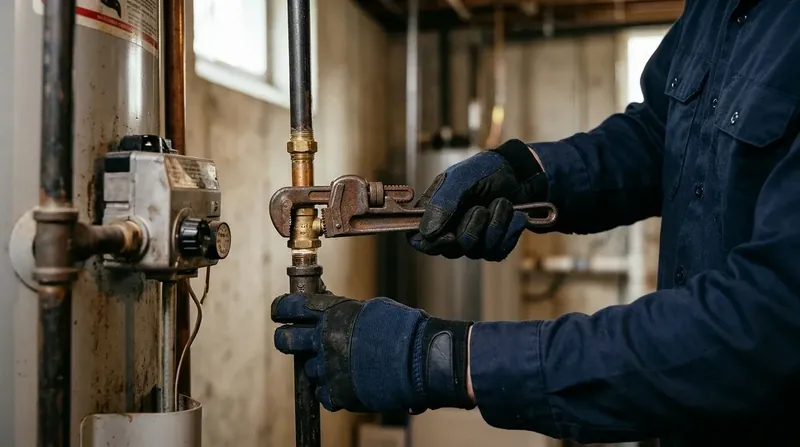
- Failed circulator or zone valve. If the pump hums but the coil pipes stay cold, or the zone valve never opens, it needs repair or replacement.
- Faulty control. The tank's thermostat (aquastat) has to close a circuit to call for heat.
- Boiler not running. Amtrol puts it plainly: the boiler must operate to generate hot water.
A quick clue: if the radiators or baseboards are also cold, the problem is the boiler. If the house is warm but the tank is cold, look at the tank's circulator, zone valve and control.
Hot water, just not enough
Amtrol's chart for insufficient hot water lists demand beyond the tank's capacity, a setting that's too low, the boiler not having enough output for heat and hot water at the same time, a fouled heat exchanger, and too little flow through the coil from an undersized or stuck pump or valve, a closed valve or trapped air.
The capacity problem shows up most on cold mornings. In a non-priority setup the tank is just another heating zone, so when every zone calls at once it may not get enough boiler water to recover, Amtrol says. In a priority setup the boiler heats the tank first and the house waits. ECR recommends priority when the boiler puts out less than 100,000 Btu per hour, or when hot water would take more than half the boiler's output. Both manuals warn that in priority mode, a stuck thermostat or failed circulator on the tank can hold off space heating indefinitely, which risks frozen pipes if nobody notices.
Water too hot, or the relief valve dripping
Amtrol lists a stuck zone valve, a stuck flow check valve, a sensor that has slipped out of its well and a return pipe plumbed on the wrong side of a heating circulator as causes of overheated water. Factory settings on its digital controls are 120°F, and it warns that higher settings raise the scald risk.
A dripping relief valve usually means pressure, not heat. Amtrol says a thermal expansion tank is required on city water, and lists a missing or undersized expansion tank, wrong precharge, or city pressure over 80 psi as causes. See our guides to the expansion tank and a leaking relief valve.
Maintenance that keeps it going
Both manufacturers want a yearly check by a licensed professional. ECR's list for the owner includes:
- Checking boiler and domestic piping for leaks at joints, unions and valves.
- Testing the temperature and pressure relief valve by lifting its lever.
- Flushing sediment from the drain valve until it runs clear.
- Watching for scale on the coil. Hard water can coat it, and the symptoms match sediment buildup.
- Inspecting the anode, if your model has one, and replacing it when more than 6 inches of core wire shows.
Sediment and scale both show up as slower recovery. ECR and Amtrol both use the same test: a small temperature difference between the boiler supply and return pipes at the tank. Amtrol says less than 20°F on a cold start means the heat exchanger needs cleaning. Our flushing guide covers the drain-valve part.
Where you'll find them
Indirect tanks are common in homes heated by oil or gas boilers. About 28% of homes in Plymouth, Massachusetts heat with oil, and many of those get hot water from the boiler through a tankless coil or an indirect tank (see our Plymouth page). Hingham's split is similar, with 28% on oil and 54% on gas (see our Hingham page).
If the tank itself is leaking, that's a replacement, not a repair. When the tank is fine and the boiler side is the problem, it's a no hot water call.
Rather have a plumber look at it?
Call and describe what's happening. We'll get a plumber out to diagnose and fix it.
Call for service(858) 465-8561Local pages mentioned
Related water heater services
Common questions
Why is my indirect water heater not heating?
Usually because the boiler isn't sending it heat. Amtrol lists no power, an air-bound or failed circulator, a stuck zone valve, a faulty tank control and a boiler that isn't running.
Does an indirect water heater work in summer?
Yes, as long as the boiler is on. The boiler fires whenever the tank calls for heat, even when the house doesn't need any.
What is priority on an indirect water heater?
Priority means the boiler heats the tank before the house. ECR recommends it for boilers under 100,000 Btu per hour, but warns a failed tank control could delay space heating.
Sources
- Amtrol, BoilerMate Indirect-Fired Water Heater Installation & Operation Instructions (2025)
- ECR International (Utica), H2O Indirect-Fired Water Heaters Installation, Operation & Maintenance Manual
General information only. Gas, electrical and pressure work can be dangerous; when in doubt, call a licensed professional.
Still stuck? Get a plumber out.
Call now for water heater repair or replacement.