Water heater leaking from the top: where to look
Water on top of the tank, or running down its side, usually comes from the pipes and valves up there. That's better news than a leak at the bottom. Here's how to trace it.
Updated October 26, 2026 · 5 min read · By the Heater Doctor team
Short answer
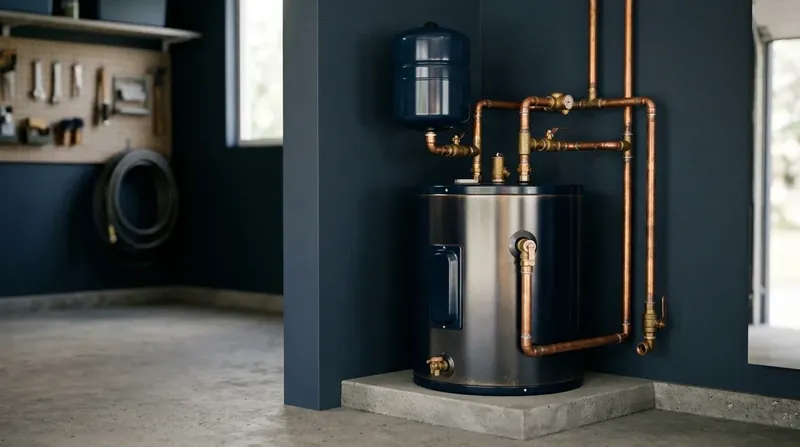
Most leaks at the top of a water heater come from the cold inlet or hot outlet connections, the temperature and pressure relief valve, the shutoff valve, or corrosion where copper pipe meets the steel tank. Those parts can usually be tightened or replaced. A. O. Smith says that if the tank itself is leaking, the heater has to be replaced, so rule out the fittings first.
Stop the water first
The building code calls for an accessible shutoff valve on the cold water pipe at or near every water heater. Close it to stop fresh water feeding the leak. Turn off the breaker on an electric heater, or set a gas heater's control to off or pilot. The water in the tank stays hot for hours, so keep your hands clear of the fittings until it cools.
Inlet and outlet connections
The two pipes on top carry cold water in and hot water out. A. O. Smith's leak guide says these connections can loosen over time from thermal expansion and wear, and then need tightening or replacing. Its Bulletin 51 adds a catch: in a warm or humid room, condensation can form on the cold pipe and run down onto the tank, which looks like a leak but isn't.
Wipe each fitting dry with a paper towel and watch which one gets wet first. A drip at a flexible connector or a threaded joint is usually a quick repair.
White or green crust: corroded nipples
The short threaded pipes screwed into the top of the tank are called nipples. Where copper pipe meets the steel tank, galvanic corrosion can set in. An NIH technical bulletin explains that it takes three things: two dissimilar metals, an electrolyte such as water touching both, and an electrical path between them. Dielectric fittings separate the metals to prevent it.
A crusty white, green or rust-colored build-up around a nipple usually means a slow leak has been seeping and evaporating for a while. A plumber can replace corroded nipples or add dielectric fittings. If the corrosion has eaten into the tank opening itself, replacement is the safer call.
Water chemistry plays a part too. Marshfield, Massachusetts treats its naturally acidic well water at every well, and in 2024 sampling 2 of 41 homes were above the copper action level (see our Marshfield page).
The relief valve
The relief valve sits on the top or upper side of the tank with a pipe running down toward the floor. Water at its threads is a connection leak. Water coming out of the pipe means the valve opened, usually from high pressure or thermal expansion. Our guide to a leaking relief valve walks through it. Never cap or plug that valve.
Shutoff valve, anode port and elements
The cold water shutoff valve can drip from its stem, especially right after it's been turned. Tightening the packing nut a little often stops it. The anode rod screws into a port on top of many tanks, and a leak there can mean the threads need resealing, or that the rod and tank are badly corroded. On electric heaters, Bulletin 51 notes that leaks from the element gaskets can be fixed by replacing the gaskets, and the element threads may need resealing.
High pressure behind it all
A. O. Smith says excessive water pressure stresses the heater and can cause leaks at the tank and the connections, and that a pressure-reducing valve or an expansion tank can fix it. A hose-bib pressure gauge costs little. Post Falls, Idaho reports average system pressure of 65 to 75 psi, higher in the south of town (see our Post Falls page).
Rather have a plumber look at it?
Call and describe what's happening. We'll get a plumber out to diagnose and fix it.
Call for service(858) 465-8561Local pages mentioned
Related water heater services
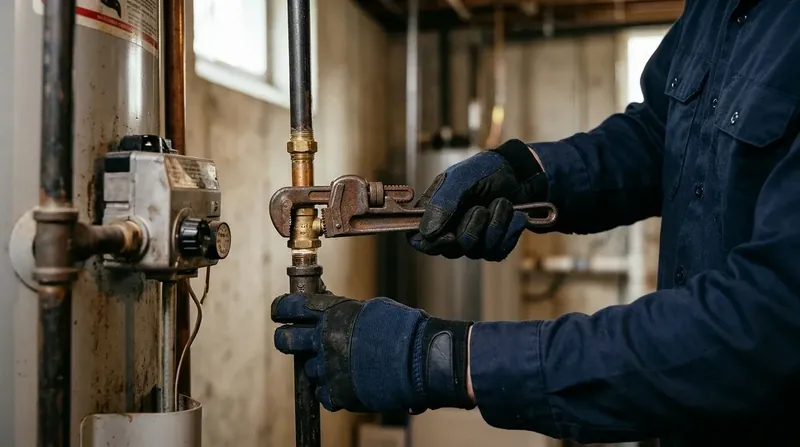
Water Heater Repair
Gas, electric and tankless repairs, from pilot lights to heating elements.
Learn more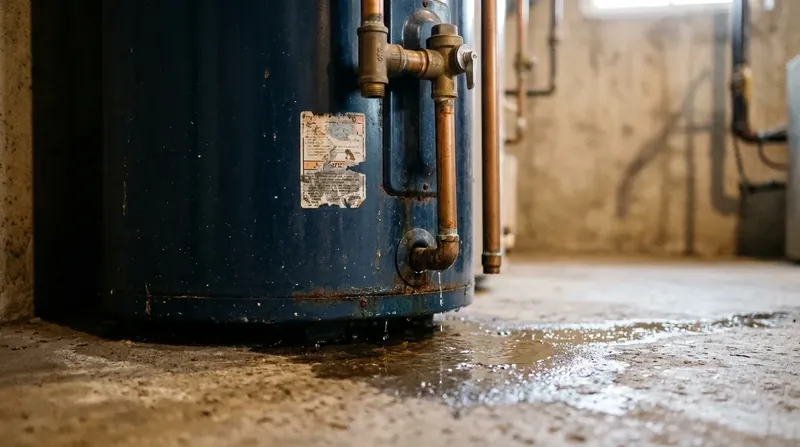
Leaking Water Heater
Water around the tank or a dripping relief valve. Act before it floods.
Learn more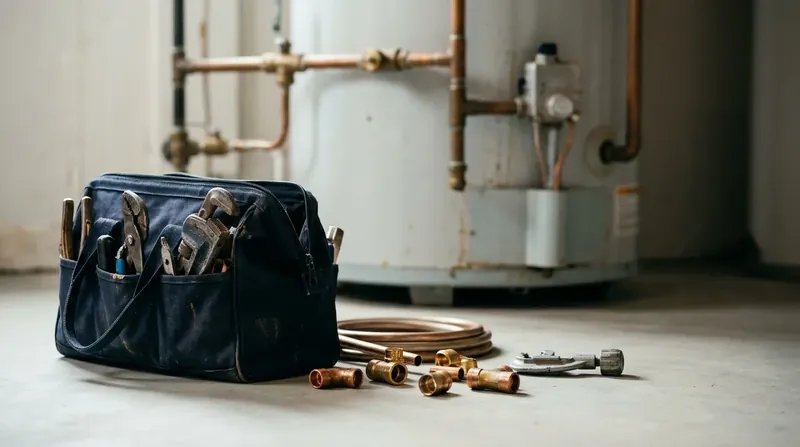
Emergency Water Heater Repair
Burst tank, gas smell or water everywhere. Call right away.
Learn moreCommon questions
Can I keep using a water heater that's leaking from the top?
Briefly, if the leak is small and you can catch it, but close the cold supply when you can't watch it and get it fixed. Small top leaks corrode fittings and can spread.
Why is there water on top of my water heater but no leak?
It may be condensation. A. O. Smith notes that in warm or humid rooms, condensation can run down the cold water pipe and the connections on top.
Is a leak at the top cheaper to fix than one at the bottom?
Usually. Top leaks tend to be fittings and valves that can be replaced. A leak from the tank itself, usually at the bottom, means a new heater.
Sources
- A. O. Smith, How to Diagnose, Fix, and Prevent Water Heater Leaks
- A. O. Smith, Technical Bulletin 51: Puddle on Floor
- NIH Office of Research Facilities, Technical Bulletin: Dielectric Fittings (Sept. 2018)
- International Residential Code, Section P2903.9.2 Water heater valve
General information only. Gas, electrical and pressure work can be dangerous; when in doubt, call a licensed professional.
Still stuck? Get a plumber out.
Call now for water heater repair or replacement.