Water heater shut-off valve: where to find it and how to use it
When a water heater leaks, the first minute matters. Knowing which valve to turn, and in what order to shut the heater down, can save a floor. Here's where the shut-offs are on a typical gas or electric tank, what the plumbing code requires, and how to use them.
Updated October 29, 2026 · 6 min read · By the Heater Doctor team
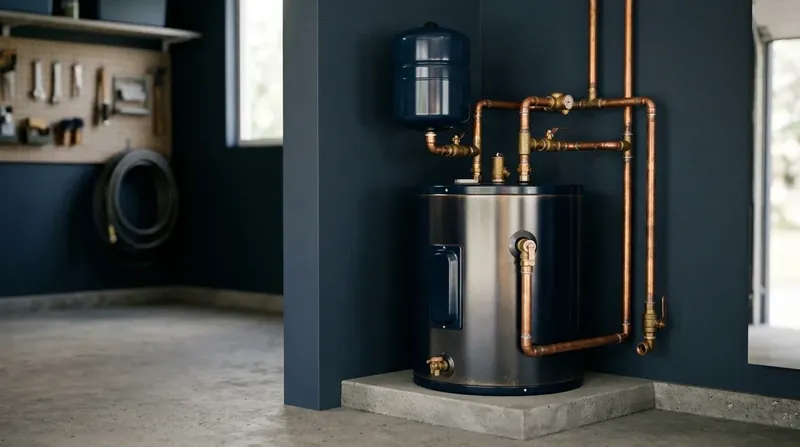
Short answer
Every tank water heater should have a shut-off valve on the cold water pipe that feeds it, usually on the pipe above the heater on the cold side. The International Residential Code requires a readily accessible full-open valve in the cold water supply at or near each water heater. A gas heater also has a shut-off valve on its gas line, and an electric heater shuts off at its breaker. In a leak, turn off the cold water valve, then the gas or power.
The three shut-offs on a water heater
| Shut-off | Where to look | What it stops |
|---|---|---|
| Cold water supply valve | On the cold pipe going into the top of the tank | Water into the tank |
| Gas shut-off valve (gas heaters) | On the gas line near the heater, before the gas control | Gas to the heater |
| Circuit breaker (electric heaters) | In the main electrical panel, labeled for the water heater | Power to the elements |
A. O. Smith's installation diagrams show the cold water shut-off on the cold supply line above the heater and a gas supply shut-off on the gas line, and its manuals call for both. The code only requires a valve on the cold side.
What the code and manufacturers require
- The cold side valve is required. International Residential Code section P2903.9.2 says a readily accessible full-open valve must be installed in the cold water supply pipe to each water heater, at or near the heater.
- Use a full-flow valve. A. O. Smith's electric manual says to install the shut-off near the heater where it's readily accessible, use only valves compatible with drinking water, and use only full-flow ball or gate valves, because other types can restrict flow too much.
- Gas heaters need a gas shut-off. A. O. Smith's gas manual says to install a shut-off valve on the gas supply line, and to use a new CSA-approved gas supply line.
If your heater has no cold water valve, or one buried behind other equipment, have one added.
How to shut off a water heater in a leak
- Close the cold water supply valve. A ball valve takes a quarter turn of the lever; a gate valve with a round handle turns clockwise several times until it stops.
- Turn off the heat source. Gas: turn the gas control knob to OFF and close the manual gas valve on the supply line. Electric: switch off the breaker.
- Relieve and drain if needed. If the tank itself is leaking, A. O. Smith's draining steps are to run a hot faucet until the water is cool, connect a hose to the drain valve, keep the cold supply off, then open the drain valve and a hot faucet.
Our step-by-step for gas and electric models is in how to turn off a water heater. If water is pooling at the base, see water heater leaking from the bottom; if it's coming from the fittings above, leaking from the top.
Do I need to turn off the water heater if the main water is off?
For a short shut-off where nobody drains the lines, the tank stays full and the heater can keep running. The danger is an empty tank. A. O. Smith says turning on power to an electric heater before the tank is completely full burns out the upper element (a dry fire), and its gas manual says the tank must be full before lighting. So if the plumbing is being drained, or the water will be off long enough that someone might run the hot taps dry, turn the heater off first. When the water comes back, open a hot faucet and let it run until the air is out before turning the heater back on; A. O. Smith suggests three minutes or longer.
Valve problems to watch for
- A valve left partly closed. A. O. Smith lists a partially closed supply valve as a main cause of low pressure on the hot side only (see low hot water pressure).
- A valve that won't turn or won't fully close. Don't force it. Close the home's main water valve instead and have the heater valve replaced.
- A gas valve that won't close. Leave it, don't operate the heater, and call your gas utility.
Know where yours is before you need it
Take a minute now: find the cold water valve on your heater, the gas valve or breaker, and the home's main water shut-off. Label them if they aren't obvious. A. O. Smith's manual is blunt that, because of the normal corrosive action of water, a tank will eventually leak, and a fast shut-off limits the damage. If you're replacing a heater, ask the installer to put in a quarter-turn ball valve on the cold supply if there isn't one. Replacing a heater may also need a permit (see do you need a permit to replace a water heater).
Rather have a plumber look at it?
Call and describe what's happening. We'll get a plumber out to diagnose and fix it.
Call for service(858) 465-8561Related water heater services
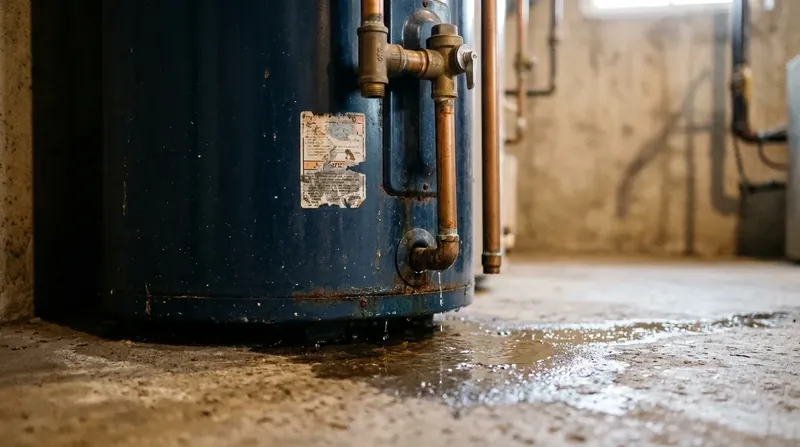
Leaking Water Heater
Water around the tank or a dripping relief valve. Act before it floods.
Learn more
Emergency Water Heater Repair
Burst tank, gas smell or water everywhere. Call right away.
Learn more
Water Heater Replacement
When repair no longer makes sense, get a new tank or tankless unit.
Learn moreCommon questions
Do hot water heaters have a shut-off valve?
They should. The International Residential Code requires a readily accessible full-open valve in the cold water supply pipe at or near each water heater. Gas heaters also have a shut-off on the gas line.
How do I shut off the water supply to my hot water heater?
Close the valve on the cold water pipe that feeds the top of the tank: a quarter turn for a ball valve, or clockwise until it stops for a gate valve. Then turn off the gas or the breaker.
Do I need to turn off my water heater if the main water supply is shut off?
Not for a short shut-off if the tank stays full. Turn it off if the lines will be drained or the hot taps might run dry; A. O. Smith warns that heating an electric tank that isn't full burns out the upper element.
Is there supposed to be a shut-off valve on the hot side?
The code requires one only on the cold supply. A. O. Smith's diagrams show the shut-off on the cold line.
What kind of shut-off valve should a water heater have?
A. O. Smith says to use a full-flow ball or gate valve rated for drinking water, installed near the heater where it's easy to reach.
Sources
- International Residential Code, Section P2903.9.2 Water heater valve
- A. O. Smith, Residential Electric Water Heater Installation Instructions and Use & Care Guide (100277323)
- A. O. Smith, Residential Standard Gas Water Heater Use and Care Guide (100277333, Oct. 2016)
General information only. Gas, electrical and pressure work can be dangerous; when in doubt, call a licensed professional.
Still stuck? Get a plumber out.
Call now for water heater repair or replacement.