How to winterize a water heater
A water heater full of water in an unheated house can freeze and crack, and a tank left sitting for weeks brings its own hazard when you come back. Whether you're closing a cabin, leaving a rental empty or heading south for the winter, here's how to protect the heater, based on manufacturers' instructions.
Updated October 29, 2026 · 7 min read · By the Heater Doctor team
Short answer
If the house will stay heated, you usually don't need to drain anything: set the heater to its vacation mode, which on A. O. Smith models holds the tank at about 55°F (gas) or 60°F (electric) and keeps it from freezing. If the heat and water will be off, turn off the gas or power, shut the cold water supply, open a hot faucet and drain the tank completely through the drain valve with a hose. Tankless heaters need power and gas for their freeze protection, so drain them if either will be off. When you return, refill completely before turning the heater back on.
Option 1: leave it on in vacation mode
If the house will stay heated and someone can check on it, the simplest choice is to keep the heater running at a low setting. A. O. Smith's gas control has a vacation (VAC) setting that holds the tank at about 55°F; its manual says this is recommended when hot water won't be used for an extended period, reduces energy losses and keeps the tank from freezing in cold weather. Its electric model with a digital control has a vacation mode at about 60°F that it says minimizes energy use and prevents freezing. On a standard electric tank, A. O. Smith says to lower the thermostat setting before you leave and raise it when you return.
Option 2: shut it off and drain it
If the heat will be off, or the water supply to the house will be shut, drain the heater so there's no water left to freeze. A. O. Smith's steps, from its gas and electric manuals:
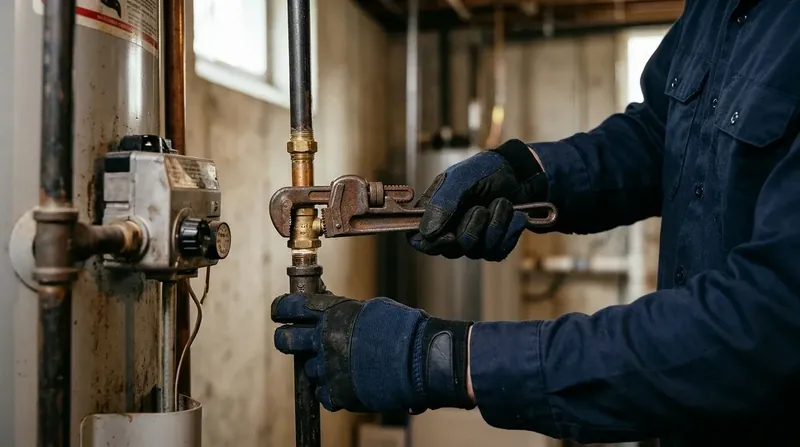
- Turn off the heat source. Gas: turn the control knob to OFF and close the manual gas valve on the supply line. Electric: switch off the breaker.
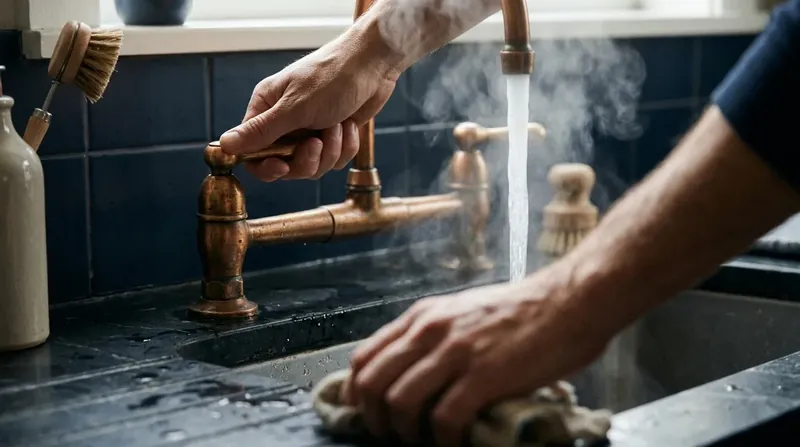
- Let the water cool. Open a hot faucet and run it until the water is cool, which can take 10 minutes or longer, to reduce the risk of scalding.
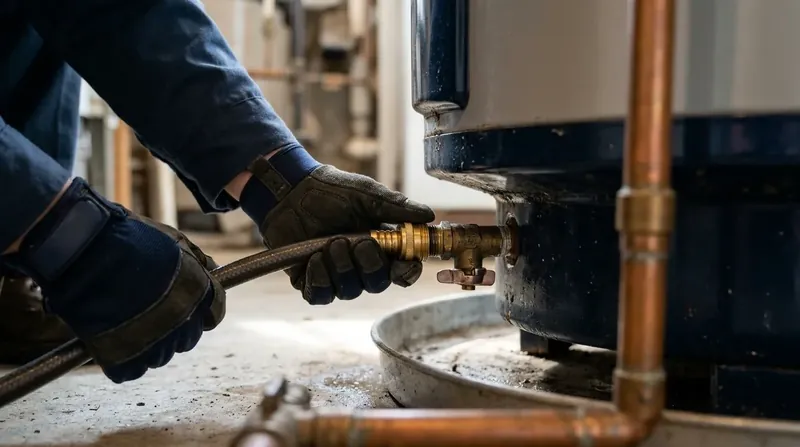
- Connect a garden hose to the drain valve near the bottom and run it to a floor drain, outdoors or into buckets.
- Turn off the cold water supply valve to the heater.
- Open the drain valve, and open a hot water faucet to let air in so the tank drains faster.
A. O. Smith warns that sediment in the bottom of the tank can clog the drain valve and stop it draining; if that happens, call a qualified person. While it's empty is a good time to look at the anode rod, which A. O. Smith says to inspect annually (see water heater anode rod). If the drain valve drips afterward, see water heater drain valve leaking.
Draining the heater doesn't protect the rest of the plumbing. If the whole house is being winterized, the water lines and fixtures need draining too; a plumber can do that part if you'd rather not.
Tankless water heaters
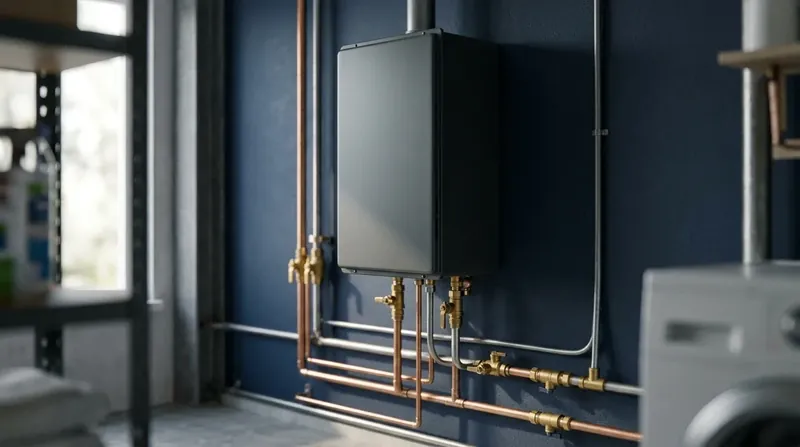
Tankless units hold only a little water, but their small passages freeze easily. Rinnai says its tankless heaters have freeze protection down to -22°F for indoor models and -4°F for outdoor models protected from wind, but only as long as the unit has both power and gas, and the pipes feeding it must be heat-traced and insulated. For outdoor units in cold climates, Rinnai strongly recommends an optional drain-down system that empties the unit if power or gas is lost. If you're shutting off power or gas for the winter, drain the unit following its owner's manual; the steps and valve locations vary by model.
Coming back is a good time to descale it (see how to flush a tankless water heater).
Protect the relief valve discharge pipe
A. O. Smith's manuals say that in cold climates the temperature and pressure relief valve's discharge pipe should end inside the building at a suitable drain, because outside drains can freeze and block the line. A blocked discharge pipe defeats the valve that protects the tank from overpressure, so make sure it's protected from freezing, especially in garages and crawlspaces (see relief valve leaking).
Starting it back up
- Close the drain valve and remove the hose.
- Open the cold water supply and a hot faucet. A. O. Smith says to let the hot water run full for three minutes or longer to purge all the air.
- Only then turn on the power or relight the pilot. A. O. Smith says powering an electric heater before the tank is completely full burns out the upper element, which it calls a dry fire and doesn't cover under warranty. Its gas manual also says the tank must be full before lighting the pilot.
- Give it time. A. O. Smith says a tank of cold water may take an hour or more to heat up after relighting.
Lighting help: how to light a water heater pilot light. If it won't heat, see no hot water in the house.
Watch for hydrogen after a long absence
A. O. Smith warns that hydrogen gas can build up in a hot water system that hasn't been used for two weeks or more, and that it's extremely flammable. This applies whether you drained the heater or left it in vacation mode; its gas manual notes the VAC setting can allow hydrogen to build up. Before using any appliance connected to the hot water, open a hot faucet at the kitchen sink for several minutes, with no smoking, flame or other ignition source nearby. A. O. Smith says that if hydrogen is present, you'll probably hear an unusual sound like air escaping as the water starts to flow.
Cold-climate homes
Freezing is a real risk where winter nights stay well below 32°F. NOAA's Longmont station, cited on our Erie, Colorado page, averages about 178 nights a year at or below freezing, with January lows near 14°F. A. O. Smith says water heaters should be installed in an area that won't freeze, so check any heater in an unheated garage or crawlspace before a long absence.
Rather have a plumber look at it?
Call and describe what's happening. We'll get a plumber out to diagnose and fix it.
Call for service(858) 465-8561Local pages mentioned
Related water heater services
Common questions
How do I winterize my hot water heater?
If the house stays heated, set it to vacation mode. If not, turn off the gas or power, shut the cold supply, open a hot faucet and drain the tank through the drain valve with a hose, following A. O. Smith's steps.
How do I keep my water heater from freezing?
Keep it running: A. O. Smith's vacation modes hold the tank at about 55°F (gas) or 60°F (electric) and prevent freezing. Tankless units need power and gas for freeze protection, Rinnai says.
Are you supposed to drain a water heater every year?
Flushing, yes: A. O. Smith recommends draining and flushing after the first six months, then at least annually, more often with hard water. A full drain for winter is only needed if the heater will be off in freezing conditions.
Do you leave faucets open after winterizing?
Opening a hot faucet lets air in so the tank drains faster. When restarting, run a hot faucet for three minutes or more after refilling to purge air before turning the heater on.
What should I do when I come back?
Refill completely, purge the air, then restore power or relight. Before using appliances on the hot water line, run the kitchen hot tap for several minutes to vent any hydrogen.
Sources
- A. O. Smith, Residential Standard Gas Water Heater Use and Care Guide (100277333, Oct. 2016)
- A. O. Smith, Residential Electric Water Heater Installation Instructions and Use & Care Guide (100277323)
- Rinnai, Residential FAQs
General information only. Gas, electrical and pressure work can be dangerous; when in doubt, call a licensed professional.
Still stuck? Get a plumber out.
Call now for water heater repair or replacement.