7 signs your water heater is going bad
Most water heaters give some warning before they quit. Catch the signs early and you can often fix the problem, or at least replace the heater on your schedule instead of after a flood.
Updated October 21, 2026 · 5 min read · By the Heater Doctor team
Short answer
The main warning signs are rumbling or popping noises, water around the base of the tank, rusty or discolored hot water, a rotten egg smell, hot water that runs out faster than it used to, rising energy bills with no change in use, and age: Rheem suggests planning for replacement around year 10. Some of these are fixable. Water leaking from the tank itself is not.
1. Rumbling, popping or crackling
Rheem says sediment is usually the cause. Minerals settle at the bottom of the tank and make the burner or element work harder. Over time that strain lowers efficiency and can lead to failure. A flush helps if the sediment hasn't hardened (see water heater noises).
2. Water around the base
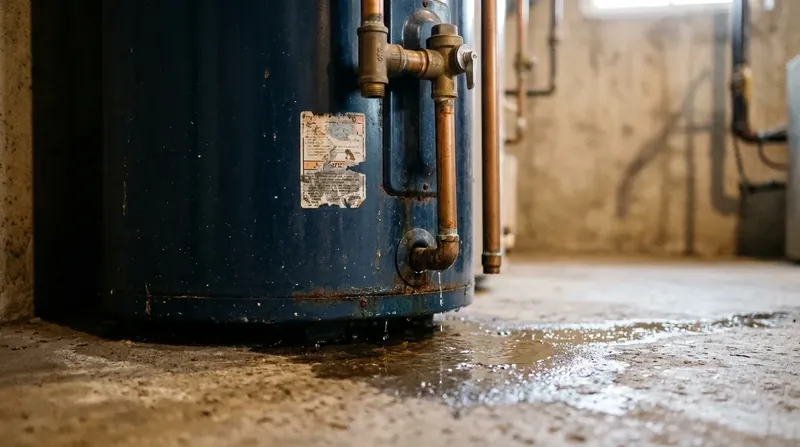
Not every leak is fatal. Rheem notes that some come from loose fittings, a failing relief valve or condensation. But water pooling around the tank body itself often means corrosion has eaten through the metal, and then replacement is the only safe fix. Because the tank is under pressure, a small drip can turn into a lot of water quickly.
3. Rusty or discolored hot water
Brown or reddish hot water, according to Rheem, often points to corrosion inside the tank or a worn-out anode rod. If the cold water is clear and only the hot is rusty, the heater is the likely source. A new anode rod sometimes helps. Persistent rust usually means the heater is near the end.
4. A rotten egg smell
Rheem lists a sulfur smell as a sign of bacteria in the tank. It's usually fixable, often by changing the anode (see rotten egg smell).
5. Hot water runs out faster
Rheem points to heavy sediment taking up space in the tank, a faulty thermostat, a burned-out heating element or a damaged dip tube. These are often repairable. If your household has grown, the heater may simply be too small now.
6. Energy bills creeping up
A failing heater can use more energy to make the same hot water. Rheem says sediment, aging parts and worn elements all cut efficiency, so the heater runs longer and more often.
7. It's about 10 years old
Rheem says most conventional tank heaters last around 10 years and recommends starting to plan a replacement around then, rather than waiting for an emergency (see how long water heaters last).
Repair or replace?
A noise, a smell, a failed element or thermostat, or a dripping relief valve on a sound tank is usually a repair. A leaking tank, or rust plus age plus repeat repairs, usually means replacement. A plumber can tell you which after seeing it.
Rather have a plumber look at it?
Call and describe what's happening. We'll get a plumber out to diagnose and fix it.
Call for service(858) 465-8561Related water heater services
Water Heater Repair
Gas, electric and tankless repairs, from pilot lights to heating elements.
Learn moreLeaking Water Heater
Water around the tank or a dripping relief valve. Act before it floods.
Learn more
Water Heater Replacement
When repair no longer makes sense, get a new tank or tankless unit.
Learn moreCommon questions
What is the most common sign a water heater is failing?
Leaks and rusty hot water are the clearest. Noise and shrinking hot water supply often come first and are more often fixable.
Can a water heater fail without warning?
Yes. Corrosion and sediment build up out of sight, so a heater can go from working to leaking with little notice, especially past 10 years.
Should I replace a 10-year-old water heater that still works?
Not automatically. Have it checked. If the tank is dry and the water is clean, many keep going. Start planning, though, so you're not choosing in a hurry.
Sources
General information only. Gas, electrical and pressure work can be dangerous; when in doubt, call a licensed professional.
Still stuck? Get a plumber out.
Call now for water heater repair or replacement.