Can a water heater explode?
It's a fair question when you hear a tank popping or see the relief valve spitting water. Yes, a water heater can explode, but it takes more than one thing going wrong, because every tank has layered safety devices. Here's how an explosion happens, which signs matter, and the few checks that keep yours safe.
Updated October 29, 2026 · 7 min read · By the Heater Doctor team
Short answer
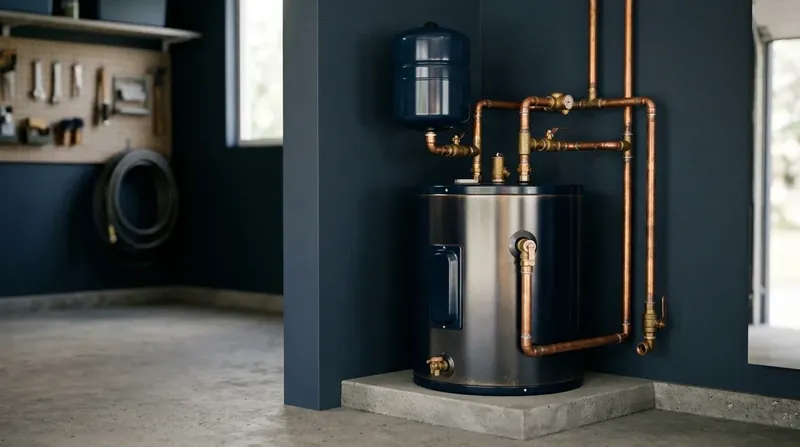
Yes. A. O. Smith warns that high temperature and pressure inside a tank can cause an explosion, and that one could occur if the temperature and pressure (T&P) relief valve or its discharge pipe is blocked. That's why the valve must never be capped or plugged. A separate danger is fire or explosion from leaking gas or flammable vapors near a gas heater. The protections are a working T&P valve, a working high-limit control, correct gas connections and keeping flammables away from the heater.
How a tank explosion happens
Water expands as it heats. In a closed tank, if a control fails and the burner or element keeps heating, temperature and pressure climb. Normally two things stop it:
- The high-limit control. On electric tanks it's the energy cut-off (ECO), the red reset button, which cuts power when the water gets too hot (see reset button keeps tripping). Gas controls have their own temperature limit.
- The T&P relief valve. The brass valve near the top of the tank. A. O. Smith says it is there to reduce the risk of explosion by discharging hot water. Watts, a major valve maker, says these valves open when the water reaches 210°F or the valve's pressure setting, typically 150 psi.
An explosion needs the heating control to fail and the relief valve to be unable to open. A. O. Smith's manual states that an explosion could occur if the T&P valve or discharge pipe is blocked, and says never to cap or plug either one, or run the heater without a working valve.
Warning signs worth acting on
| Sign | What it can mean | What to do |
|---|---|---|
| Relief valve discharging a lot of very hot water | The tank is overheating | A. O. Smith: turn off the gas (or power) and call a qualified person |
| Relief valve dripping a little | High house pressure or thermal expansion | Check pressure; see relief valve leaking |
| Water far hotter than the setting | Failed thermostat or shorted element | Turn it down or off and have it checked |
| Reset button tripping again and again | The tank keeps overheating | Have elements and thermostats tested |
| Rotten-egg smell near a gas heater | Gas leak | Don't light or switch anything; call the gas supplier from a neighbor's phone |
| Capped, plugged or missing relief valve or pipe | No pressure protection | Stop using the heater until it's fixed |
Sources: A. O. Smith gas and electric water heater manuals; Watts. A. O. Smith's electric manual says a large discharge of very hot water from the T&P valve is likely a shorted element or, more rarely, a failed thermostat or one not fitting snugly against the tank.
Popping and rumbling aren't a countdown
Many people worry when a tank starts popping. That sound is usually sediment: A. O. Smith says hard water minerals collect on the tank bottom and cause popping or rumbling as the water heats. It lowers efficiency and can damage the tank over time, so flushing is worth doing, but it isn't the same as a pressure problem (see why is my water heater making noise and how to flush a water heater).
Gas leaks and flammable vapors
A. O. Smith's gas manual warns that connecting a natural gas heater to propane (or the reverse), or exceeding the data plate's gas pressure, can cause explosion or fire. It also warns against storing or using gasoline or other flammable liquids near any gas appliance. Newer gas heaters are built with flammable vapor ignition resistance (FVIR), but A. O. Smith says it won't prevent every incident; a heater that has been through a flammable vapor event shows discoloration on the flame arrestor and must be replaced.
If you smell gas, A. O. Smith says not to light anything, not to touch electrical switches, not to use a phone in the building, and to call your gas supplier from a neighbor's phone, or the fire department if you can't reach them. It also recommends a fuel gas and carbon monoxide detector in homes with gas water heaters (see water heater smells like gas).
Hydrogen after two weeks unused
A lesser-known hazard: A. O. Smith says hydrogen gas can build up in a hot water system that hasn't been used for two weeks or more, and hydrogen is extremely flammable. After a long trip or a vacant stretch, open a hot water faucet at the kitchen sink for several minutes before using any appliance connected to the hot water. If hydrogen is present you'll probably hear air escaping as the water starts. Don't smoke or have any flame or spark near the faucet while it runs.
Can an electric water heater explode?
Yes, the pressure risk is the same: an element that keeps heating with a blocked relief valve can over-pressurize the tank. Bradford White's service manual explains how an element shorted to ground can heat continuously, "limited only by the ECO." Electric heaters don't carry the gas leak or carbon monoxide risks, A. O. Smith notes. Turning the heater off stops it adding heat, which is why A. O. Smith's instructions say to shut off the power or gas when the relief valve releases a lot of very hot water.
Simple checks that keep a tank safe
- Test the T&P valve. A. O. Smith says to operate it once a year and have it inspected every 2 to 4 years, following the schedule on the valve's label. Stand clear of the discharge, because the water can be scalding.
- Check the discharge pipe. It should run down to a safe spot with nothing capping or blocking it.
- Keep house pressure in range. A. O. Smith recommends 50 to 60 psi; the International Plumbing Code calls for a pressure-reducing valve above 80 psi. An expansion tank handles thermal expansion (see water heater expansion tank).
- Keep flammables away from a gas heater, and keep its air intake clear.
- Replace a flooded heater. A. O. Smith says a heater that has been in flood water, or whose controls were submerged, must be replaced entirely (see water heater after a flood).
- Check for recalls. The U.S. Consumer Product Safety Commission lists recalled products, including water heaters, at cpsc.gov.
Rather have a plumber look at it?
Call and describe what's happening. We'll get a plumber out to diagnose and fix it.
Call for service(858) 465-8561Related water heater services
Common questions
How common are water heater explosions?
No agency publishes a regular national count. Manufacturers design tanks with two separate protections, a high-limit control and a T&P relief valve; A. O. Smith says an explosion could occur if the relief valve or its pipe is blocked.
How do you know if your water heater is about to burst?
The serious signs are a relief valve discharging lots of very hot water, water much hotter than the setting, a reset that keeps tripping, or a capped or missing relief valve. Turn the heater off and call a technician.
Should I turn off a water heater that seems dangerous?
Yes. A. O. Smith says that if the relief valve is discharging large amounts of very hot water, turn off the gas supply (or the power on an electric heater) and call a qualified person. If you smell gas, leave the controls alone and call your gas supplier from a neighbor's phone.
Can an electric water heater explode?
Yes, if an element keeps heating and the relief valve can't open. Electric heaters don't have gas leak or carbon monoxide risks.
What happens when a water heater tank fails?
A common end is a leak. A. O. Smith says that over time a tank may corrode and develop a leak, and that a leaking tank usually means replacing the whole water heater.
Sources
- A. O. Smith, Residential Standard Gas Water Heater Use and Care Guide (100277333, Oct. 2016)
- A. O. Smith, Residential Electric Water Heater Installation Instructions and Use & Care Guide (100277323)
- Watts, T&P and ASME Safety Relief Valves
- Bradford White, Service Manual: Residential and Light Duty Commercial Electric Water Heaters (238-54711-00A, rev. 5/22)
- International Plumbing Code 2021, Section 604.8
- A. O. Smith, Is Your Hot Water Not Getting Hot? Common Causes & What To Do
- U.S. Consumer Product Safety Commission, Recalls & Product Safety Warnings
General information only. Gas, electrical and pressure work can be dangerous; when in doubt, call a licensed professional.
Still stuck? Get a plumber out.
Call now for water heater repair or replacement.