Water heater igniter not working: how to check it
You hold the gas knob in, press the igniter button and hear clicks, but the pilot won't light. Sometimes the igniter is fine and the problem is air in the gas line; sometimes a loose wire or a worn part is to blame. Here is the order A. O. Smith's technical support team uses to find out, written for the push-button piezo igniters on most standard gas tanks.
Updated October 29, 2026 · 7 min read · By the Heater Doctor team
Short answer
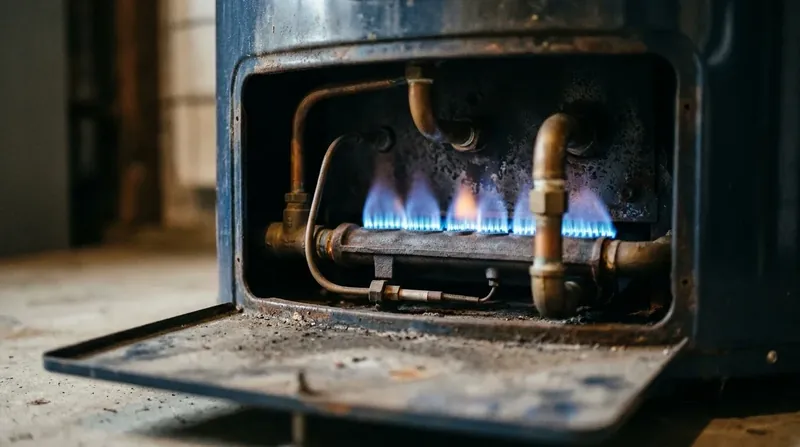
First look through the viewport while you click: if there's a spark, the igniter works and the problem is gas (air in the line, or the supply valve off). If there's no spark, A. O. Smith says to check that the igniter wire is pushed firmly into its white connector and that the connector isn't touching the metal pilot tube, manifold tube or burner door. If there's still no spark at the pilot itself, the igniter or pilot assembly likely needs replacing, which on sealed FVIR heaters means pulling the burner assembly.
How the igniter fits in
On most standard gas tanks, the igniter is a push button on or next to the gas control. Each click makes a spark at the pilot, inside the sealed combustion chamber. You hold the gas knob in to send gas to the pilot while you click. Once the pilot lights, A. O. Smith explains that on its electronic-control models a thermopile heated by the pilot generates the electricity that runs the gas control, which can take up to 90 seconds; then the status light starts blinking once every three seconds. If you're unsure of the basic lighting steps, start with how to light a water heater pilot light.
Step 1: is it really the igniter?
Dim the room lights and look through the viewport, inside and to the left on the A. O. Smith models, while you click. A. O. Smith's support guide gives two reasons a working igniter may still fail to light the pilot:
- Air in the gas line. It may take up to 90 seconds of holding the knob and clicking before gas reaches the pilot. If the status light hasn't started blinking after 90 seconds, release the knob, turn the gas control off and wait 10 minutes before trying again. On a newly installed heater, it can take two or three lighting attempts.
- Gas supply off. If you can see a spark, make sure the gas supply valve to the heater is on and try again.
If you see a spark and still can't light the pilot after that, A. O. Smith says to call the number on the side of the heater for help.
Step 2: no spark? Check the wire and connector
A. O. Smith's guide says that if you don't see a spark:
- Check that the orange or white igniter wire is firmly inserted into the white connector.
- Make sure the white connector isn't touching the metal pilot tube, manifold tube or manifold door. If it is, bend the connector away.
If that doesn't bring the spark back, the guide's next step is to remove the outer door screws and pull the burner assembly out just far enough to watch the igniter tip while clicking. If it sparks there, replace the assembly, re-tighten the door screws and make sure the door gasket seals completely against the combustion chamber. If there's still no spark, the igniter or pilot assembly has likely failed. Because this involves opening a sealed combustion chamber and gas connections, this is a sensible point to call a technician.
Step 3: pilot lights but won't stay lit
If the igniter does its job but the pilot goes out when you release the knob, the problem is no longer the igniter. On electronic-control models, A. O. Smith's support guide lists these reasons the status light won't start blinking:
- the thermopile isn't hot enough yet (hold the knob the full 90 seconds);
- the thermal switch has tripped;
- gas control wiring is bad or connectors are loose;
- the thermopile itself is bad.
Its test for the thermopile: with the pilot lit for a few minutes, a multimeter across the thermopile leads should read at least 350 millivolts DC. Below that, replace the pilot and thermopile assembly; at or above it, if the light still won't blink, replace the gas control. On older heaters with a thermocouple instead, see water heater thermocouple and pilot light keeps going out.
If the thermal switch has tripped
A. O. Smith says a tripped thermal switch can mean the heater's air supply is restricted, there's negative air pressure in the home, the vent is blocked, or there are flammable vapors near the heater. Check the area for gasoline, paint, thinners, cleaners, solvents or glue. If you find any, remove them, don't relight, and have a technician inspect the flame arrestor; a heater that has been through a flammable vapor incident must be replaced, and A. O. Smith's warranty doesn't cover it. Otherwise, clean the base-ring filter with a vacuum brush attachment and the flame arrestor with a plastic-bristle brush, make sure the vent isn't blocked, then relight (see venting and backdrafting).
Can you light the pilot without the igniter?
On newer heaters with a flammable vapor ignition resistant (FVIR) design, generally not. The combustion chamber is sealed, and A. O. Smith's manual says to replace the viewport if the glass is missing or damaged and to keep the door seals intact. Some older heaters were designed for manual lighting and say so on the lighting label. Only follow the label on your own heater, and never open a sealed chamber to reach the pilot with a flame. If the igniter has failed, replacing it (or the pilot assembly it's part of) is the fix.
Tankless and power-vent heaters
Tankless units and some power-vent tanks use electronic ignition or controls that need household power, so check that the unit has power first. Tankless units report ignition problems with codes: on Rinnai units, code 11 is an ignition failure and code 12 means the flame went out. The code chart in the manual is the place to start (see tankless water heater not heating).
Can the igniter be replaced?
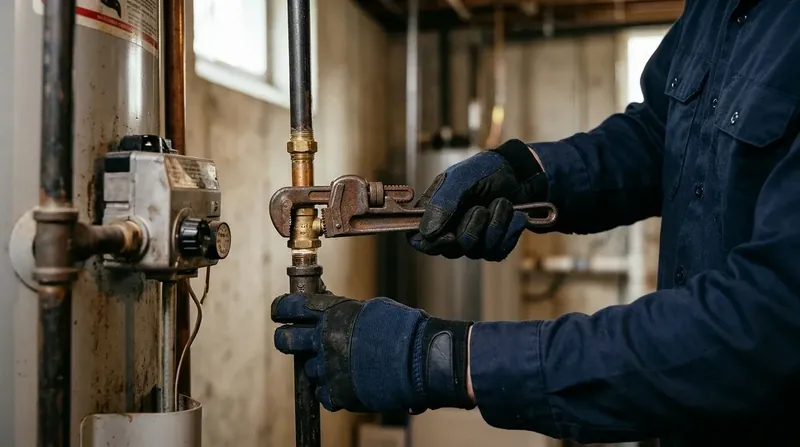
Yes. On the A. O. Smith tanks in its manual and support guide, the igniter sits on the pilot assembly, and the pilot assembly kit includes the thermopile. Replacement means shutting off the gas, removing the burner assembly from the sealed chamber, swapping the part and resealing the door. Because a poor reseal or loose gas fitting creates a safety problem, it's a job for a qualified technician on most heaters. If the gas control or pilot assembly fails on an older heater, compare the repair with replacement (see water heater repair cost).
Rather have a plumber look at it?
Call and describe what's happening. We'll get a plumber out to diagnose and fix it.
Call for service(858) 465-8561Related water heater services
Common questions
Why won't my water heater igniter spark?
A. O. Smith points first to the igniter wire: it must be firmly inserted in its white connector, and the connector mustn't touch the metal pilot tube, manifold tube or door. If there's still no spark at the pilot, the igniter or pilot assembly needs replacing.
Why does my igniter click but the pilot won't light?
If you can see a spark, the igniter works. A. O. Smith says air in the gas line can take up to 90 seconds to clear, and new installs may need two or three attempts with 10 minutes between them. Also check that the gas supply valve is on.
How do I light my water heater pilot without the igniter?
On sealed FVIR heaters you generally can't; the combustion chamber is designed to stay closed. Follow only the lighting label on your heater, and replace a failed igniter.
Can an igniter be replaced on a water heater?
Yes. On many FVIR tanks it sits on the pilot assembly, replaced by removing the burner assembly and resealing the chamber door, usually by a technician.
Why does my pilot light go out when I let go of the knob?
On electronic-control models, A. O. Smith says the thermopile may not be hot enough yet, the thermal switch may have tripped, wiring may be loose, or the thermopile may be bad. Hold the knob a full 90 seconds before releasing.
Sources
- A. O. Smith Res Tech Support, Gas Electronic Control Water Heaters: Status Light Does Not Blink (Rev 2A)
- A. O. Smith, Residential Standard Gas Water Heater Use and Care Guide (100277333, Oct. 2016)
- A. O. Smith, How to Relight a Water Heater's Pilot Light
- Lennox, How to Light a Pilot Light on a Water Heater
- Rinnai, Troubleshooting Tankless Water Heater Diagnostic Codes
General information only. Gas, electrical and pressure work can be dangerous; when in doubt, call a licensed professional.
Still stuck? Get a plumber out.
Call now for water heater repair or replacement.