Water softeners and water heaters: what softened water does to your tank
Hard water and water heaters don't get along, so a softener sounds like an easy win. It mostly is, with one catch that shortens tank life if nobody checks it.
Updated October 26, 2026 · 6 min read · By the Heater Doctor team
Short answer
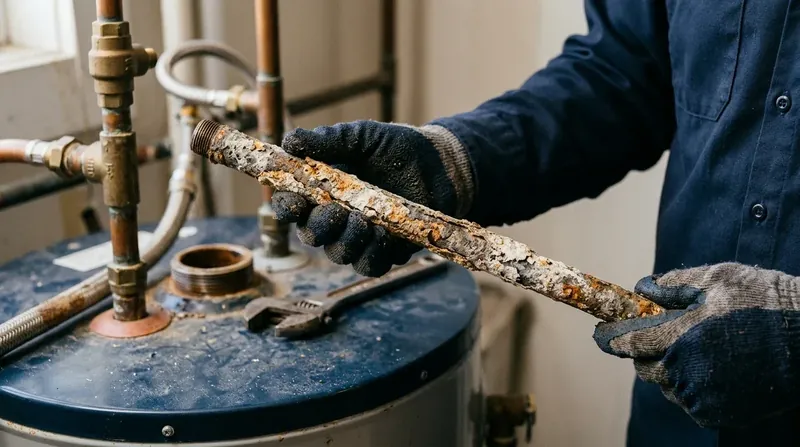
A water softener keeps calcium and magnesium scale out of the water heater, which helps it hold its efficiency and is close to essential for tankless heaters on hard water. The catch is the anode rod. A. O. Smith says softened water makes the anode wear out faster, so the tank needs its anode inspected more often, and A. O. Smith's manual calls for an annual check on softened water. Swap the anode before it's gone and a softener is a net plus.
What hard water does to a water heater
The U.S. Geological Survey explains that when hard water is heated, calcium carbonate comes out as solid scale, which can shorten equipment life, raise the cost of heating water, lower the efficiency of electric water heaters and clog pipes. It classifies water up to 60 mg/L as soft, 61 to 120 as moderately hard, 121 to 180 as hard and more than 180 as very hard. Divide mg/L by about 17.1 to get grains per gallon.
In a tank, scale settles as sediment, which is what makes a water heater pop and rumble. Our guides to water heater noises and flushing cover that.
What a softener fixes
A Battelle study for the Water Quality Research Foundation, a water treatment industry group, ran gas tank, electric tank and gas tankless heaters on softened and unsoftened water under accelerated conditions. It found:
- Gas tank heaters on unsoftened water dropped from 70.4% to 67.4% efficiency over the equivalent of two years. On softened water, scale buildup was almost negligible.
- Tankless heaters on unsoftened water had to be delimed at the equivalent of 1.6 years, after efficiency fell from 80% to 72%. Deliming only brought them back to about 77%.
- Low-flow showerheads and faucets on unsoftened water clogged in under seven days of the accelerated test.
Keep in mind who paid for it, but the direction matches what manufacturers say. Rheem's water treatment team says softeners can help a water heater last longer by keeping minerals out of the tank.
The catch: the anode rod
A tank water heater has a sacrificial anode rod that corrodes so the steel tank doesn't. A. O. Smith's Bulletin 44 explains why softened water speeds that up:
- A softener swaps calcium and magnesium for sodium. That lowers hardness but not conductivity, and higher conductivity makes the anode corrode faster.
- If the softener isn't rinsed properly after regenerating, leftover salt reaches the tank and does the same.
- A thin film of scale actually protects exposed steel, such as pipe connections and welds. A. O. Smith's tests found a 33% drop in steel corrosion with a thin scale film. Softened water prevents that film, so the anode does all the work.
A. O. Smith's conclusion: customers with softeners should expect faster anode consumption and inspect and replace anodes more often. Its installation manual says softened water requires an annual anode inspection. Rheem suggests switching from a magnesium anode to an aluminum, zinc or hybrid rod on soft water. See our anode rod guide.
Tankless heaters and hard water
For tankless units, treating hard water matters more, because scale builds inside a small heat exchanger. Noritz's warranty terms say the warranty becomes null and void if hardness above 12 grains per gallon (200 mg/L) contributes to a failure. Our guide to a tankless heater that won't heat covers scale codes such as Rinnai's LC.
Do you need one?
Look up your water report first. Some areas are very hard: the Manheim Area Water and Sewer Authority in Pennsylvania puts its average at 17.48 grains per gallon (299 mg/L), from two deep wells (see our Manheim page). Others soften at the plant. Westerville, Ohio says it softens its water to about 125 mg/L, or 7 grains per gallon (see our Westerville page).
If you add a softener to a home with a tank heater, put an anode check on the calendar for the first year and see how fast it's going. If you're replacing the heater anyway, our replacement page covers tank and tankless options.
Rather have a plumber look at it?
Call and describe what's happening. We'll get a plumber out to diagnose and fix it.
Call for service(858) 465-8561Local pages mentioned
Related water heater services
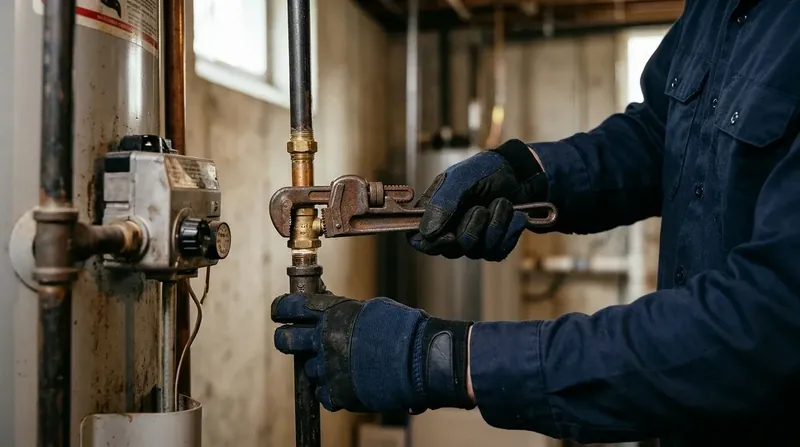
Water Heater Repair
Gas, electric and tankless repairs, from pilot lights to heating elements.
Learn more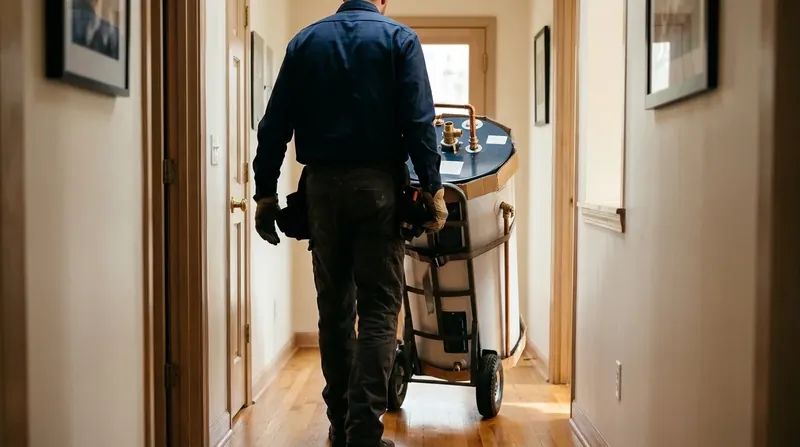
Water Heater Replacement
When repair no longer makes sense, get a new tank or tankless unit.
Learn more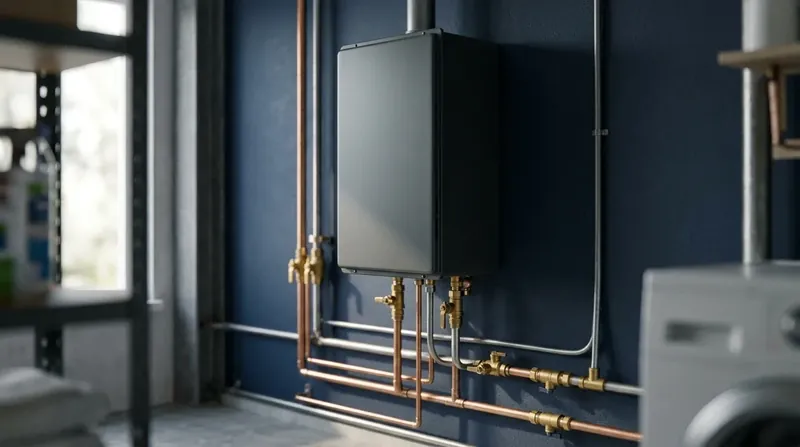
Tankless Water Heater Repair
Error codes, lukewarm water and scale buildup on tankless units.
Learn moreCommon questions
Does a water softener damage a water heater?
Not directly, but A. O. Smith says softened water makes the anode rod wear out faster. Inspect the anode yearly and replace it before it's used up.
Does a water softener help a water heater?
Yes. It stops scale. In a Battelle study for a water treatment industry group, gas tank heaters on softened water held their efficiency, while those on hard water lost efficiency.
What anode rod is best with a water softener?
Rheem suggests an aluminum, zinc or hybrid anode instead of magnesium on softened water, because magnesium wears down quickly.
Sources
- U.S. Geological Survey, Hardness of Water
- Water Quality Association, WQRF Softened Water Benefits Study: Energy Savings (Battelle)
- Rheem Water Treatment, How will a water softener affect my water heater?
- A. O. Smith, Technical Bulletin 44: Water Softeners
- A. O. Smith, Residential Gas Water Heater with FVIR: Installation Instructions and Use & Care Guide
- Noritz, Product registration and warranty terms
General information only. Gas, electrical and pressure work can be dangerous; when in doubt, call a licensed professional.
Still stuck? Get a plumber out.
Call now for water heater repair or replacement.