Water heater sweating: is it condensation or a leak?
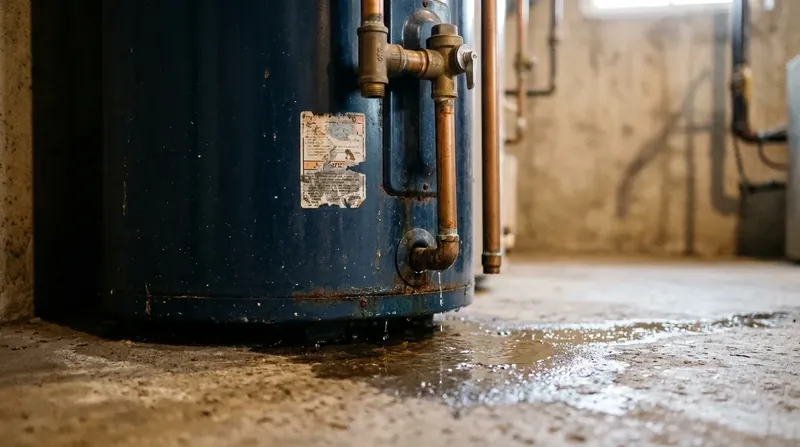
You find drops on the tank, a sizzle from the burner or a small puddle underneath, and assume the heater is failing. Often it's just condensation, which is normal and harmless. Here's why water heaters sweat, the test manufacturers use to tell it from a real leak, and what helps.
Updated October 29, 2026 · 6 min read · By the Heater Doctor team
Short answer
A water heater sweats when water vapor touches a surface colder than its dew point. On gas heaters, A. O. Smith says cold incoming water chills the tank and flue, and the hot burner exhaust condenses on them; a typical heater produces about half a gallon of water vapor per hour of burner operation. Condensation stops once the whole tank is above about 115°F. To tell it from a leak, A. O. Smith says to wipe the floor dry, turn the gas control to pilot and check again after 8 hours: a dry floor means it was condensation.
Why water heaters sweat
Bradford White compares it to a cold drink sweating on a summer day. Condensation forms when moist air or gas meets a surface below its dew point, the temperature at which water vapor turns to liquid. A water heater has three ways to get there:
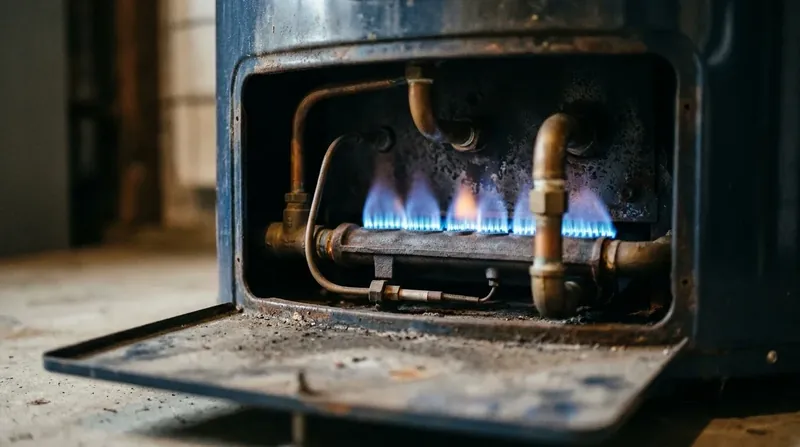
- Inside the flue (gas heaters). A. O. Smith's Bulletin 15 says low incoming water temperatures cool the piping and heat-transfer surfaces, and when the burner comes on, the hot flue gases condense on them. That water drips down onto the burner, which is why you may hear sizzling.
- On the outside of the tank. During heavy hot water use, cold water rushing in cools the tank's outer surface, and A. O. Smith says it can condense moisture from the air. High humidity makes this more likely.
- On the cold pipe. Bradford White notes that cold incoming water in winter can make copper pipes sweat in a warmer basement.
When it's most common
- Winter. Bradford White says cold incoming water in winter reacts with the warmer tank and makes it condense.
- A new or refilled heater. A. O. Smith says condensation is common when a heater is first filled or refilled, because the tank is full of cold water. Its gas manual adds that you may hear drips or sizzling and see a small puddle after first lighting, and that it goes away once the tank reaches operating temperature.
- After heavy use. Back-to-back showers or laundry fill the tank with cold water; A. O. Smith says this condensation is usually temporary.
- Newer, efficient gas heaters. A. O. Smith says newer heaters condense more than older ones, because they pull more heat out of the flame, which lowers flue gas temperatures closer to the dew point. Bradford White says the same about energy-saver models.
The 8-hour test: condensation or leak?
A. O. Smith's Bulletin 15 gives this test for gas heaters:
- Wipe up any water under the heater.
- Turn the thermostat knob to the PILOT position so the burner stays off.
- Wait 8 hours and check for water under the heater.
If the floor stays dry, the heater was condensing. If water collects anyway, A. O. Smith says to look for a loose fitting, and if every fitting is tight and the tank itself is leaking, the heater needs to be replaced; a leaking tank can't be repaired. Our guide to a water heater leaking from the bottom walks through the other places water comes from, including the drain valve and the relief valve.
Signs it's probably not condensation
- Water keeps appearing with the burner off, as in the test above.
- Drips trace back to a pipe fitting, the relief valve discharge pipe or the drain valve.
- The heater is electric. Electric heaters have no burner, so there is no flue gas condensation; water under one is more likely a fitting, valve or tank leak, though a cold tank can still sweat in a humid room.
How to stop or manage sweating
- Give it time. A. O. Smith says condensation should stop once the entire tank is above about 115°F.
- Lower the humidity. For condensation on the outside of the tank, A. O. Smith suggests a dehumidifier or better ventilation.
- Insulate. For older tanks in cool or unheated spaces, A. O. Smith says an insulation blanket can reduce condensation by keeping the outer surface warmer. Follow the heater's label and the blanket's instructions.
- Use a drain pan. Bradford White suggests setting the heater in a drain pan to collect condensation until it evaporates, and notes that some gas utilities and local codes don't allow a plastic pan under a gas heater, so use a metal one there. The 2018 International Residential Code already requires a pan where a leak would cause damage, at least 1-1/2 inches deep with a drain of at least 3/4 inch (see water heater drain pan).
- Keep the venting in good shape. A. O. Smith's advice is to make sure vents and flues on gas models are working properly (see venting and backdrafting).
When to call
Call a technician if water keeps collecting after the 8-hour test, or if you can't find where it's coming from. A tank that's leaking needs replacing, and the sooner it's caught the less damage it does (see signs your water heater is going bad).
Rather have a plumber look at it?
Call and describe what's happening. We'll get a plumber out to diagnose and fix it.
Call for service(858) 465-8561Related water heater services
Common questions
Is it normal for a water heater to sweat?
Yes, especially on gas heaters in winter, after heavy use or right after filling. A. O. Smith says condensation stops once the whole tank is above about 115°F.
How do I know if my water heater is leaking or just condensation?
Wipe the floor dry, set the gas control to PILOT and wait 8 hours. A. O. Smith says a dry floor means condensation; water means a leak at a fitting or the tank.
Why is my water heater dripping water from the burner area?
On a gas heater, flue gases condense on surfaces chilled by cold incoming water and drip onto the burner. A. O. Smith says a typical heater makes about half a gallon of water vapor per hour of operation.
How do I stop my water heater from sweating?
Let the tank reach temperature, lower room humidity with a dehumidifier or ventilation, and on older tanks consider an insulation blanket, following the heater's label. A drain pan catches what drips.
Do new water heaters condense more?
Yes. A. O. Smith and Bradford White both say newer, more efficient gas heaters condense more because they extract more heat, leaving cooler flue gases.
Sources
- A. O. Smith, Technical Bulletin 15: Condensation
- Bradford White, Condensation (all residential and commercial gas units)
- A. O. Smith, Is Your Hot Water Not Getting Hot? Common Causes & What To Do
- A. O. Smith, Residential Standard Gas Water Heater Use and Care Guide (100277333, Oct. 2016)
- International Residential Code 2018, Section P2801.6.1 Pan size and drain
- International Residential Code 2018, Section P2801.6 Required pan
General information only. Gas, electrical and pressure work can be dangerous; when in doubt, call a licensed professional.
Still stuck? Get a plumber out.
Call now for water heater repair or replacement.